
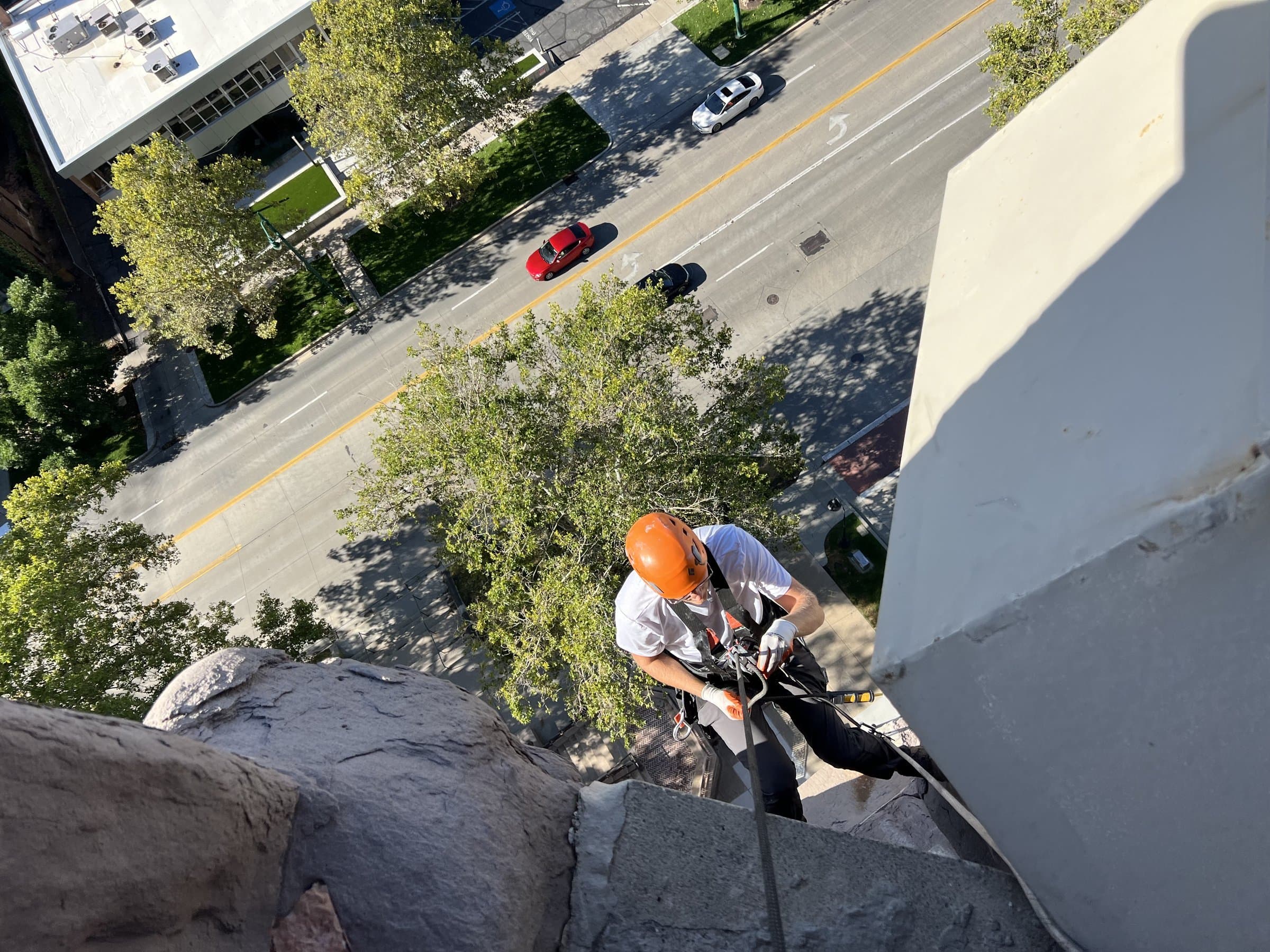
Step 1–2: Inspect and seal secondary openings
We locate primary exits and every secondary gap. Secondary openings get sealed first so bats are funneled to controlled one-way devices. Missing a weep hole or gable screen is how colonies “come back” a week later on Spokane Valley and Kennewick roofs.
Step 3–4: Install one-way devices and monitor
Tubes, cones, or netting match the opening type. Bats exit to feed and find the return blocked. We monitor for continued activity—especially important after windy Columbia Basin days that can shift temporary materials—before declaring the roost clear.
Step 5–6: Permanent sealing and optional cleanup
When activity stops, primary exits are permanently sealed with materials suited to freeze-thaw and summer sun. Guano cleanup and insulation decisions follow so you are not remediating an active roost. Warranty language covers the openings we sealed.
Why DIY exclusion fails
Foam-only patches, store-bought netting on one hole, and mid-maternity sealing create trapped bats, living-space intrusions, or quick re-entry. Professional mapping costs less than repeating a failed attic project twice.
Ready for help in Spokane, the Tri-Cities, or elsewhere in the 509? Start with bat removal or an attic inspection.