Lewis-Clark Valley / Asotin County · 509
Bat removal in Clarkston, Washington
Clarkston sits on the sandy flats of the Snake River at its confluence with the Clearwater, directly across the river from Lewiston, Idaho, with steep bluffs rising on either side. The city is home to about 7,350 people, and many more live in the surrounding Clarkston Heights and Asotin County neighborhoods. In September 2026 Asotin County recorded its first rabid bat since 2010. Washington Wildlife Specialists handles Clarkston-area attic, wall and commercial exclusions with inspection-first, one-way methods and a two-year written warranty on whole-structure work.
Local housing & attic patterns in Clarkston
Clarkston began as Jawbone Flats, was platted in 1896 as Vineland by the Lewiston Water and Power Company, which carried irrigation water from Asotin Creek, and took the Clarkston name by petition in 1900. Its population nearly doubled between 1940 and 1950, so the city is a mix of early-1900s homes near downtown and the 1913 Carnegie library, postwar ranches and bungalows on the grid, and later houses up on the heights. Older homes tend to open up at gable vents, soffit returns, brick chimneys and siding laps; postwar ranches at soffit-to-fascia corners and garage tie-ins; newer heights homes at ridge-vent ends and builder-grade trim. Downtown commercial buildings, shops and warehouses near the river add parapets, metal-panel seams and long ridge caps. We inspect the attic, the full exterior and any outbuilding on the lot.
Bat seasonality around Clarkston
Clarkston sits at about 810 feet, one of the lowest and warmest spots in eastern Washington, with hot, dry summers and insect-rich river corridors along the Snake and Clearwater. Summer heat drives colonies into shaded wall cavities and the cooler corners of attics. WDFW says Washington bats move into hibernation sites in late September or October and stay until April or early May, with pups born starting around May. One-way exclusion fits mid-August to mid-October, after young can fly, or early spring before births. Bats found hibernating in a building after October 15 should be left until spring, so a winter call usually means sealing entries into living space now and scheduling the full exclusion later.
Neighborhoods & landmarks we know
We work throughout Clarkston, ZIP 99403: the downtown grid around Fifth and Sixth streets, older blocks near the Snake River levee and the Lewiston–Clarkston bridge approach, Clarkston Heights and the Vineland area above town, homes along the Highway 12 and 13th Street corridors, and riverfront and rural parcels toward Asotin and up the Snake. Asotin and Clarkston Heights addresses are on the same route—call with the address to confirm.
Why hire a local eastern Washington crew
Clarkston is the Washington side of a two-state valley, and bat questions here involve Washington agencies even when the nearest services are in Lewiston. We follow Washington rules: Asotin County Health District for exposures, WDFW Eastern Region for wildlife, and a WDFW-referred private operator for the removal itself. River-valley heat and wind break down foam and cheap screening, so we seal with exclusion-grade materials matched to the trim. Every entry we close is documented, timing follows WDFW guidance, and whole-structure work carries a two-year written warranty.
- Bat specialists since 2011 — bats are our flagship service
- Documented inspection: openings numbered, photographed, primary vs. secondary
- Targeted repair or whole-structure seal (warranty on whole-structure)
- Humane one-way exclusion · WDFW-aware timing (May–August maternity)
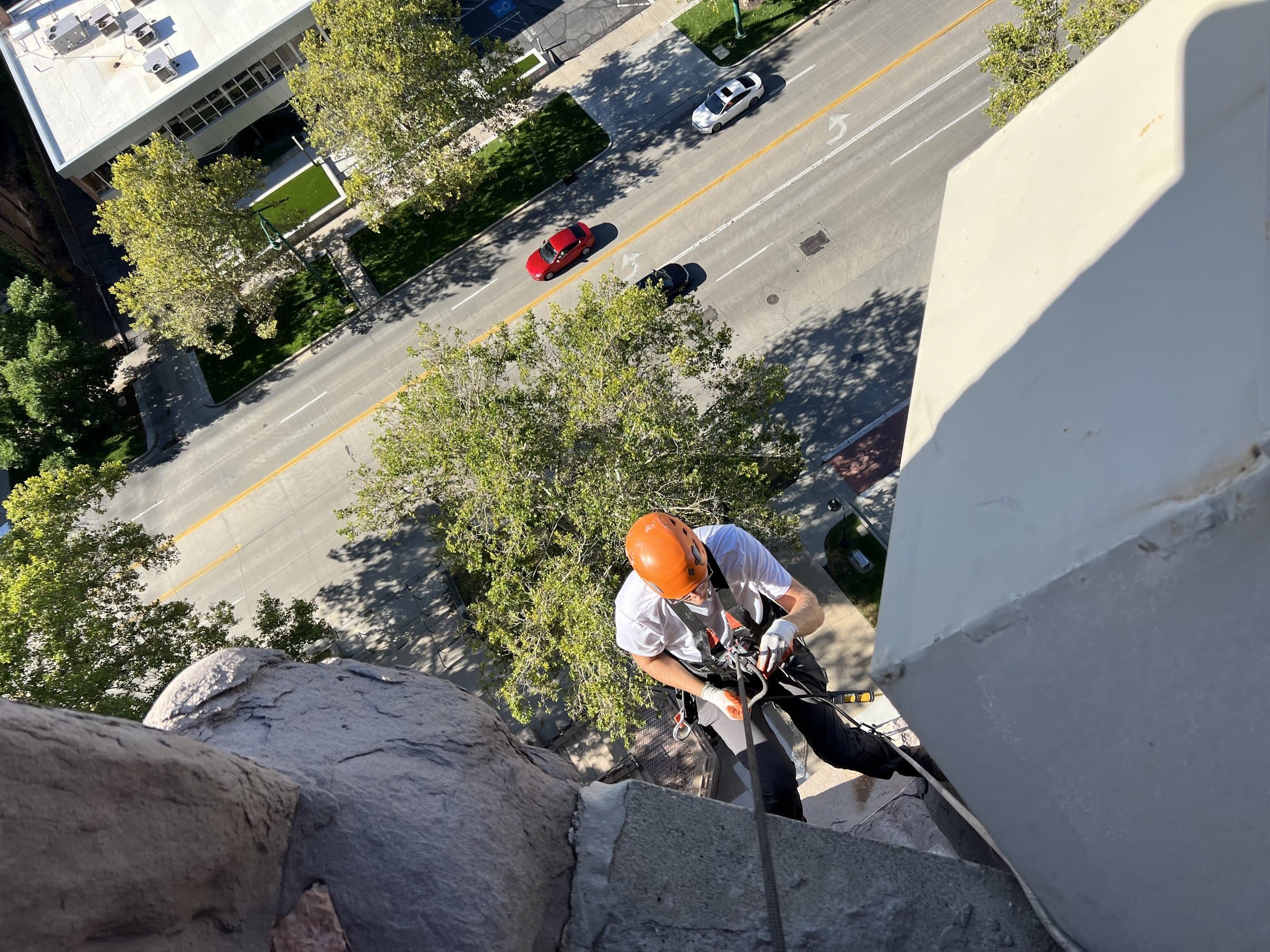
- High-rise / rope-access capacity for elevated buildings
- We finish failed prior jobs—remove old foam and devices
- Two-year written warranty on sealed whole-structure work
- Local eastern WA ownership, backed by a multi-state team
Typical Clarkston jobs start with a phone consultation, then an attic inspection, followed by humane exclusion and optional guano cleanup. Commercial properties can use our commercial bat removal program.
Local bat facts for Clarkston
Washington OFM estimates Clarkston’s April 1, 2026 population at 7,350 and Asotin County’s at 22,950. The city incorporated on August 14, 1902. Washington DOH’s 2026 rabid-bat table lists one positive bat from Asotin County in September.
Who to call in Clarkston
- Bat in the house or any bat contact: Asotin County Health District, 509-243-3344 (Mon–Thu 7:30–5:30; press 0 for urgent after-hours public health issues). 719 5th Street, Clarkston.
- Dogs, strays and city animal ordinances: Clarkston Animal Control Officer through Clarkston Police dispatch, 509-758-2331. Does not remove wildlife from homes.
- Wildlife questions: WDFW Eastern Region office in Spokane Valley, 509-892-1001 (serves Asotin County).
- Bats living in the attic or walls: A private wildlife control operator. WDFW does not remove bats; it refers homeowners to nuisance wildlife control operators.
Sources
- Asotin County Health District – Contact & hours
- Northwest Public Broadcasting – Numerous children exposed to rabid bat at Asotin school (Sept. 25, 2026)
- Big Country News – Rabid bat found at Asotin-Anatone School (ACHD release)
- City of Clarkston – Animal Control
- Revisiting Washington – Clarkston
- WDFW – Regional offices (Eastern Region 1)
- WDFW – Hiring a Wildlife Control Operator
- WDFW – Living with wildlife: Bats
- Washington State DOH – Rabies activity in Washington
- Washington OFM – April 1 population of cities, towns and counties
Clarkston bat removal FAQ
Clarkston & nearby cities
- Pullman bat removal
Palouse / Whitman County
- Walla Walla bat removal
Walla Walla Valley / Walla Walla County
- College Place bat removal
Walla Walla Valley / Walla Walla County
- Spokane bat removal
Spokane metro
- Cheney bat removal
West Plains / Spokane County
- Kennewick bat removal
Tri-Cities
- All service areas
Eastern Washington hub
- Why us
Proof points & team
- How we work
Process steps
- Warranty
Two-year coverage
- FAQ
Common questions
Bat problems in Clarkston? Let's talk.
Humane exclusion for Clarkston and the surrounding Lewis-Clark Valley / Asotin County. Two-year written warranty on whole-structure work. Same-day often available across the 509.